Domestic violence Saudi Arabia: where do you report it, what protection exists, and what penalties does the law set?
Domestic violence Saudi Arabia law is covered mainly by the Law of Protection from Abuse (Royal Decree No. M/52, 15/11/1434H) and, for children, by the Child Protection Law. The Law of Protection from Abuse uses the word “abuse”, and it covers physical, psychological and sexual harm or threats, as well as neglect of the basic needs of a dependant. Anyone can report, and a report does not require documents.
This guide explains how to report domestic violence in Saudi Arabia, what the authorities can do, the penalties in Article 13, how the Child Protection Law adds to it, and how a report relates to divorce and custody claims. If you or someone else is in immediate danger, contact the police first and do not wait to gather evidence.
Have you reported abuse, or are you facing an investigation or a family claim linked to it? You can send a short summary on WhatsApp and the Al-Safwa Law Firm team will review the file and the stage of the case in confidence.
Table of Contents
Domestic violence Saudi Arabia at a glance
| Question | Short answer |
|---|---|
| Main law | Law of Protection from Abuse (Royal Decree M/52, 15/11/1434H); Articles 7, 12 and 13 were amended by Royal Decree M/72 (6/8/1443H) |
| Where to report | The Ministry of Human Resources and Social Development, or the police, which refer the report to the Ministry; the Ministry’s domestic violence hotline is 1919 |
| Who can report | The victim, or anyone who learns of abuse; some people must report |
| Basic penalty | 1 month to 1 year in prison and/or a fine of SAR 5,000 to 50,000 (Article 13) |
| Aggravated penalty | 1 to 5 years in prison and a fine of SAR 50,000 to 300,000 (Article 13) |
| Children | Child Protection Law: up to 2 years and/or SAR 100,000; 2 to 5 years and SAR 100,000 to 500,000 in aggravated cases |
What counts as abuse under the law?
Article 1 defines abuse as exploitation, or physical, psychological or sexual harm, or a threat of it, committed by a person who goes beyond his powers and responsibilities in a relationship of guardianship, dependency, sponsorship, trusteeship or livelihood. It also covers an individual’s omission or negligence in providing basic needs to a family member or dependant for whom he is legally responsible.
This means a case does not need a visible injury. A continuing threat, psychological abuse or the withholding of basic needs can fall within the law. An ordinary argument between family members is different from conduct that involves harm, threats or exploitation.
Domestic violence Saudi Arabia: how do you report it?
Under Article 3, anyone who learns of abuse must report it immediately. Public employees and private-sector employees who learn of abuse through their work must tell their employer, who must then report it immediately to the Ministry or the police. Under Article 4, the Ministry and the police accept reports from victims, from public and private entities and from witnesses. The police take the steps within their jurisdiction and refer the report to the Ministry without delay.
The Ministry runs a free domestic violence reporting service for citizens and residents, and it can be used when someone else is being abused. The domestic violence hotline is 1919, and the service is offered in Arabic and English. Check the Ministry’s website for the current channels and hours.
A report does not require a medical report or any file. Do not delay contacting the authorities because you do not have evidence, especially when protection is urgent.
What happens after a report?
- Documentation. The Reports Center records the report and refers it to the Protection Center for the area. The Center confirms the reporter’s identity if possible.
- Classification. The case is classed by severity as low, medium or critical.
- Protection measures. The Ministry can arrange health care and medical evaluation, steps to prevent recurrence, family counselling, psychological treatment, and statements from the parties (Article 7).
- Urgent cases. If life, safety or health is at risk, the Ministry notifies the governor or security authorities and coordinates with them to move the victim, or the abuser if necessary, to a suitable place until the danger passes (Article 8).
- Criminal referral. If the Ministry considers the abuse a crime, it notifies the competent authority (Article 11), and monitors the case, in some cases for at least six months after a final ruling (Article 12).
In low-risk cases, the executive regulation allows the case to stay within the family if the abuser signs a legal pledge to stop the abuse. In critical cases, security authorities are informed and the Public Prosecution can be involved.
What protection is available to the victim?
Protection is wider than a criminal case. The law aims to provide assistance, treatment, shelter and social, psychological and health care, and to hold the abuser accountable. Shelter can be provided to women of any age and to children under 18 who cannot stay with relatives. The executive regulation sets an initial stay of three days, which can be extended with approval up to two months, with further extension if needed. Residents can continue working and can stay in touch with family under the centre’s supervision.
Since the 2022 amendment, a victim or representative can also be authorised to enter the home, collect identity documents and take personal belongings, with security authorities present. In critical cases, the Public Prosecution may order the abuser not to contact the victim until a certificate of psychological rehabilitation is issued.
Is the reporter’s identity kept confidential?
Yes, as a rule. The law says a reporter’s identity may not be disclosed without consent, except in cases set out in the regulations, and staff who learn of cases through their work must keep them confidential (Article 5). A reporter is exempt from liability if the case is found not to be abuse under the law (Article 6). The executive regulation presumes that the reporter acted in good faith, and repeated incorrect reports can be referred to the Public Prosecution.
Domestic violence Saudi Arabia penalties: what does Article 13 set?
Domestic violence Saudi Arabia penalties come from Article 13, as amended. Both levels apply without prejudice to a harsher penalty under Sharia or another law.
| Level | Prison | Fine |
|---|---|---|
| Basic offence | 1 month to 1 year | SAR 5,000 to 50,000, or either penalty |
| Aggravated offence | 1 to 5 years | SAR 50,000 to 300,000 |
| Repeat offence | The penalty is doubled | |
The aggravated level applies if the victim is a person with a disability, a parent, a person over 60, or a pregnant woman who loses the pregnancy as a result; if the abuse takes place in a workplace, educational institution or place of worship; if the abuser is entrusted with enforcing the law; if a weapon is used; or if there are multiple acts of abuse in the same incident. A person who incites, agrees to or helps in the offence faces the same penalty. The court may impose an alternative to imprisonment in the basic case. The court decides the actual sentence on the facts.
How does the Child Protection Law add to this?
The Child Protection Law defines a child as anyone under 18 and covers physical, emotional and sexual abuse and neglect of basic needs. Anyone who becomes aware of abuse or neglect must report it without delay (Article 21). The Public Prosecution investigates and files charges, the competent court decides the penalty, and the Ministry follows the case until the court resolves it (Article 23).
- Abuse is punishable by up to 2 years in prison, a fine of up to SAR 100,000, or both (Article 23 bis).
- In aggravated cases, such as a disabled victim, abuse in a school or care facility, abuse by someone enforcing the law, use of a weapon or multiple acts, the penalty is 2 to 5 years and SAR 100,000 to 500,000.
- The penalty is doubled for a repeat offence, and anyone who incites or helps faces the same penalty.
How is a report linked to divorce and custody?
A report is not the same as a family claim. The report deals with the abuse and with protection, and divorce, dissolution, custody and maintenance each follow their own procedure. Under Article 108 of the Family Law, the court dissolves the marriage at the wife’s request if proper marital life is impossible because of harm by the husband and the harm is established. Read our guides on how to file divorce in Saudi Arabia, divorce in Saudi Arabia and what the law says when a husband abandons his wife.
When children are at risk, their interests are a separate issue in custody matters. Our custody lawyer in Jeddah and personal status lawyer in Jeddah pages explain how these files are handled.
What evidence is useful?
You do not need complete proof to report, but evidence helps later in an investigation or a claim. Keep a medical report if there is an injury, threatening messages, relevant photos or recordings, the names of witnesses, and the record of earlier reports. Save originals and do not edit them. Write a short timeline with dates and places.
Does domestic violence Saudi Arabia law protect foreigners and residents?
The reporting service is available to citizens and residents, and the Law of Protection from Abuse is not limited by nationality. The executive regulation does not address residency status. A resident victim who is unsure about the effect of a report on a residence permit or a family case should get advice early.
When do you need a lawyer?
You do not need a lawyer to report. A lawyer becomes important when the matter reaches an investigation, a criminal charge, a claim for compensation, or a divorce or custody case. A judgment can be appealed within 30 days under Article 194 of the Law of Criminal Procedure. If the accusation is a crime, see our criminal lawyer in Jeddah page, and our guide to harassment law in Saudi Arabia for the related offence of sexual harassment.
Do you want the report, the evidence or the family claim reviewed before the next step? You can message us on WhatsApp with a short summary and the team will assess the stage of your case.
Frequently Asked Questions about domestic violence Saudi Arabia
Domestic violence Saudi Arabia: how do I report it?
Contact the Ministry of Human Resources and Social Development through its domestic violence service, including the 1919 hotline, or go to the police, who refer the report to the Ministry. In immediate danger, contact the police first.
Do I need proof to file a report?
No. A report does not require documents. Evidence such as medical reports and messages becomes more important later, if there is an investigation or a claim.
Is domestic violence a crime in Saudi Arabia?
Abuse that falls under the law is punishable under Article 13, with 1 month to 1 year and/or SAR 5,000 to 50,000 in the basic case, and higher penalties in aggravated cases.
Is my identity kept secret if I report?
As a rule, yes. The law says the reporter’s identity may not be disclosed without consent, except in cases set out in the regulations.
Can a wife get a divorce because of violence?
She can ask the court to dissolve the marriage if the harm is established (Article 108 of the Family Law). A report for abuse is a separate step and does not replace that claim.
Does the law protect children?
Yes. The Child Protection Law covers anyone under 18, requires anyone who learns of abuse to report it, and sets penalties of up to 2 years and SAR 100,000, rising to 2 to 5 years and SAR 100,000 to 500,000 in aggravated cases.
This guide covered domestic violence Saudi Arabia law: the definition of abuse, reporting, protection measures, the penalties and the link with family claims. For a real situation, you can also use the contact page or the WhatsApp button at the bottom of the screen.
Sources:
- Law of Protection from Abuse – Ministry of Human Resources and Social Development
- Executive Regulation of the Law of Protection from Abuse – Ministry of Human Resources and Social Development
- Child Protection Law – Ministry of Human Resources and Social Development
- Reporting domestic violence service – Ministry of Human Resources and Social Development
- Family Law (official English translation) – Bureau of Experts at the Council of Ministers
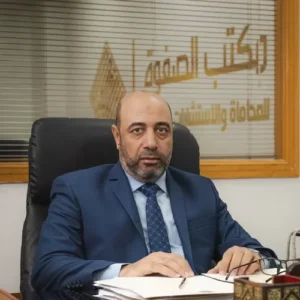
A legal advisor holding a Bachelor’s degree in Law from the prestigious Cairo University. He possesses extensive experience spanning over 25 years in criminal, civil, and family law, during which he has achieved notable accomplishments that have solidified his reputation as a valuable asset to any legal team